


Five LATAM Cities Join UNESCO’s Creative Cities Network
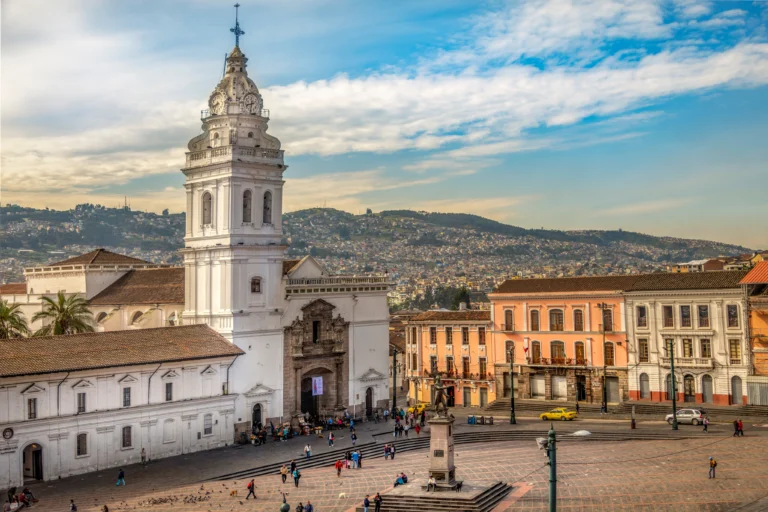
Quito, Ecuador, UNESCO’s Creative City for Architecture. X/ @UNESCO.
October 31, 2025 Hour: 12:01 pm
Currently, this network comprises 408 cities in over 100 countries.
On Friday, Audrey Azoulay, the director of the United Nations Educational, Scientific and Cultural Organization (UNESCO), announced that five Latin American cities were among 58 new members of the “Creative Cities Network.”
RELATED:
UNESCO: 34 Lebanese Cultural Sites on Protection
Sao Paulo in Brazil joined the network for film and San Luis Potosi in Mexico for literature, while San Javier de Loncomilla in Chile, Manizales in Colombia, and Cuenca in Ecuador joined for gastronomy.
Azoulay explained that the Network demonstrates that culture and creative industries can be concrete drivers of development. “The inclusion of these 58 cities consolidates a network where creativity accompanies local initiatives, attracts investment, and fosters social cohesion,” she added.
With the new designations, the UNESCO network now comprises 408 cities in more than 100 countries, recognized for their commitment to creative industries and cultural media. This year, architecture joins the seven creative fields: crafts and folk art, digital arts, design, film, gastronomy, literature, and music.
The cities stand out for their commitment to culture, and their innovative approaches to urban planning. From Kisumu, Kenya and New Orleans, U.S., designated for their music, to Malang, Indonesia for digital arts, each city values a distinct cultural heritage.
The Creative Cities Network was created by UNESCO in 2004, and by investing in cultural sectors, these cities develop concrete strategies that meet local needs and contribute to major global goals like the 2030 Agenda.
On Friday, Bogota will host the UN’s World Cities Day, the main global event on sustainable urban development. This Colombian city was chosen due to its urban practices, institutional capacity, and approach to a more inclusive habitat.
teleSUR: JP
Source: EFE – UNESCO